One list, one truth
Active Directory is the source list. Servers, test OUs and exempted devices are excluded by rules, so every report counts the same set.
For digital technology and cybersecurity teams
Endpoint Command Center
SCCM, Intune, EDR, DLP and your other security agents say different things about the same computer. ECC cross-matches them all and measures what is missing on which device and how healthy your endpoints are, on one screen.
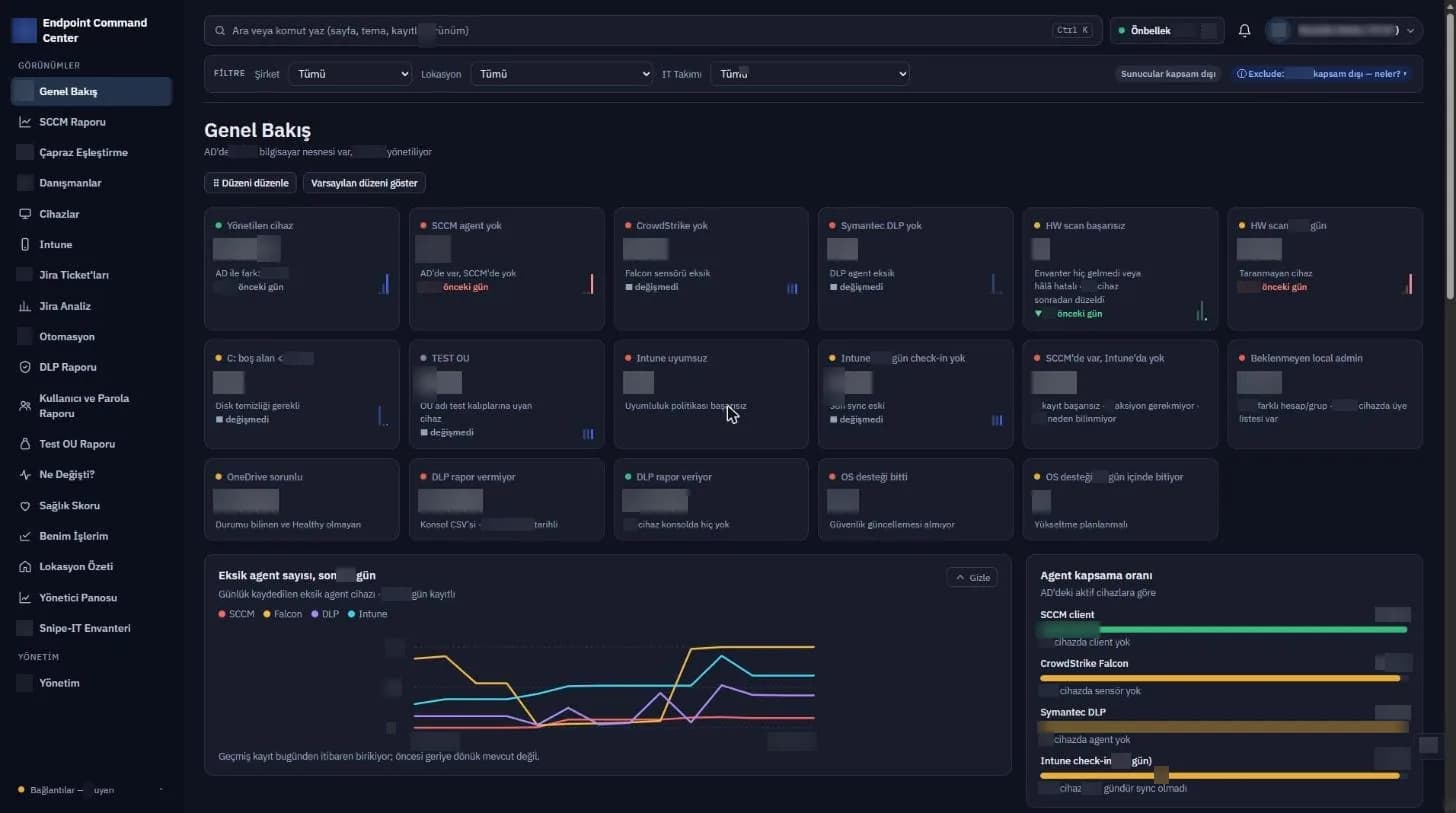
Active Directory is the source list. Every computer is checked one by one against all other sources: is the agent there, is it running, how fresh is the data.
Added per project
ManageEngine Endpoint Central · Sophos · Microsoft Defender for Endpoint · MDR · EDR · Tenable · Qualys · Wazuh and other security and management tools with an interface.
Product names are trademarks of their respective owners; Vertikod is not affiliated with these companies.
01
It connects to source systems with read-only accounts. It installs no agent and changes nothing on user computers.
02
It matches every computer across sources by hostname, serial number and cloud device ID. Conflicting records count as ‘ambiguous’ and are never closed by guesswork.
03
It produces a 0–100 health score per device and explains why. A device whose signal can't be read isn't penalised; it shows separately as ‘not measured’.
04
Opens a Jira ticket for a missing agent, stale inventory or non-compliance, and spells out the work for each location sentence by sentence.
The screenshots come from a live installation in the field. To protect the organisation's privacy, names of people, devices, organisations and locations, as well as the numbers, are blurred; the layout is unchanged.
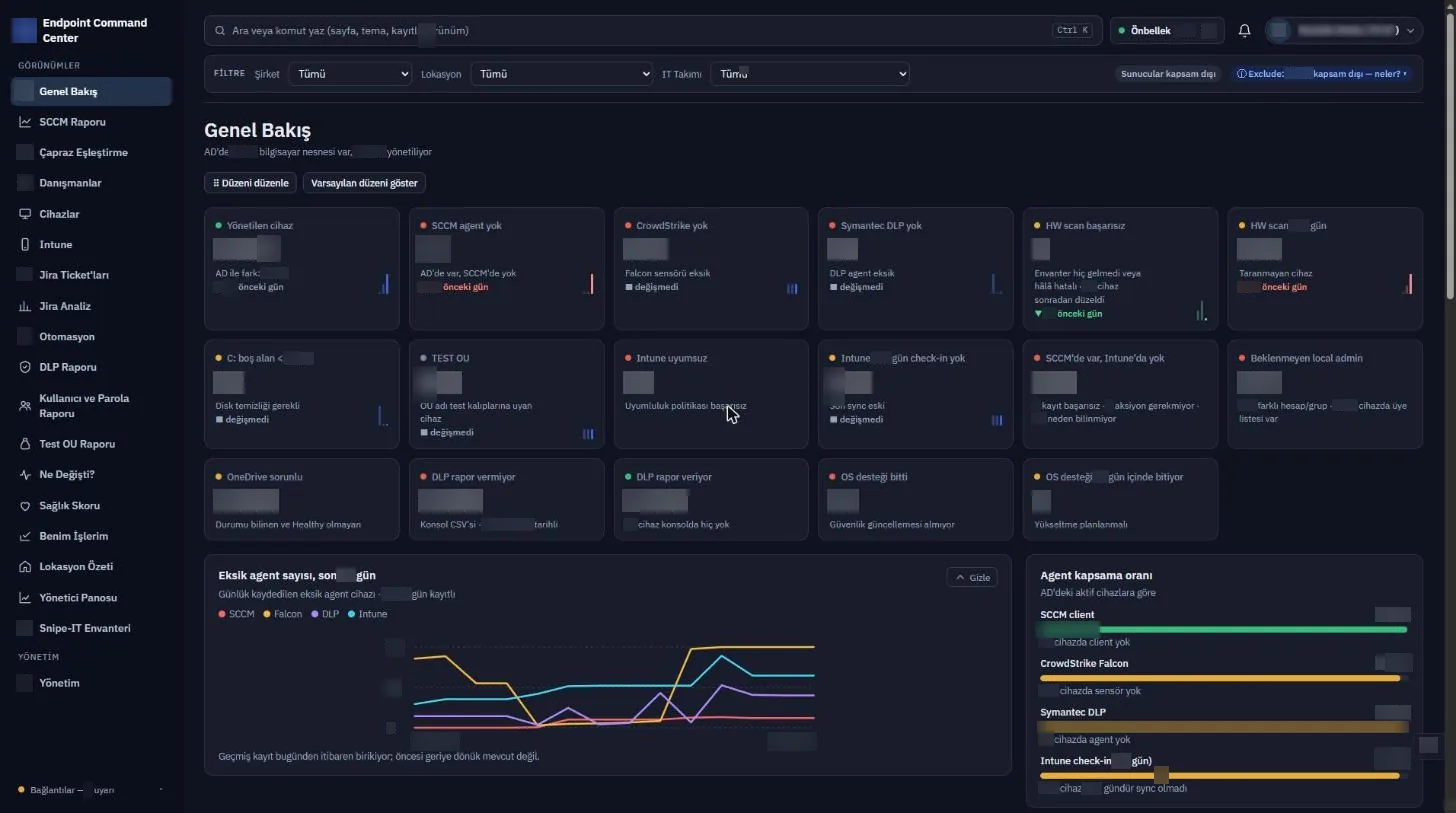
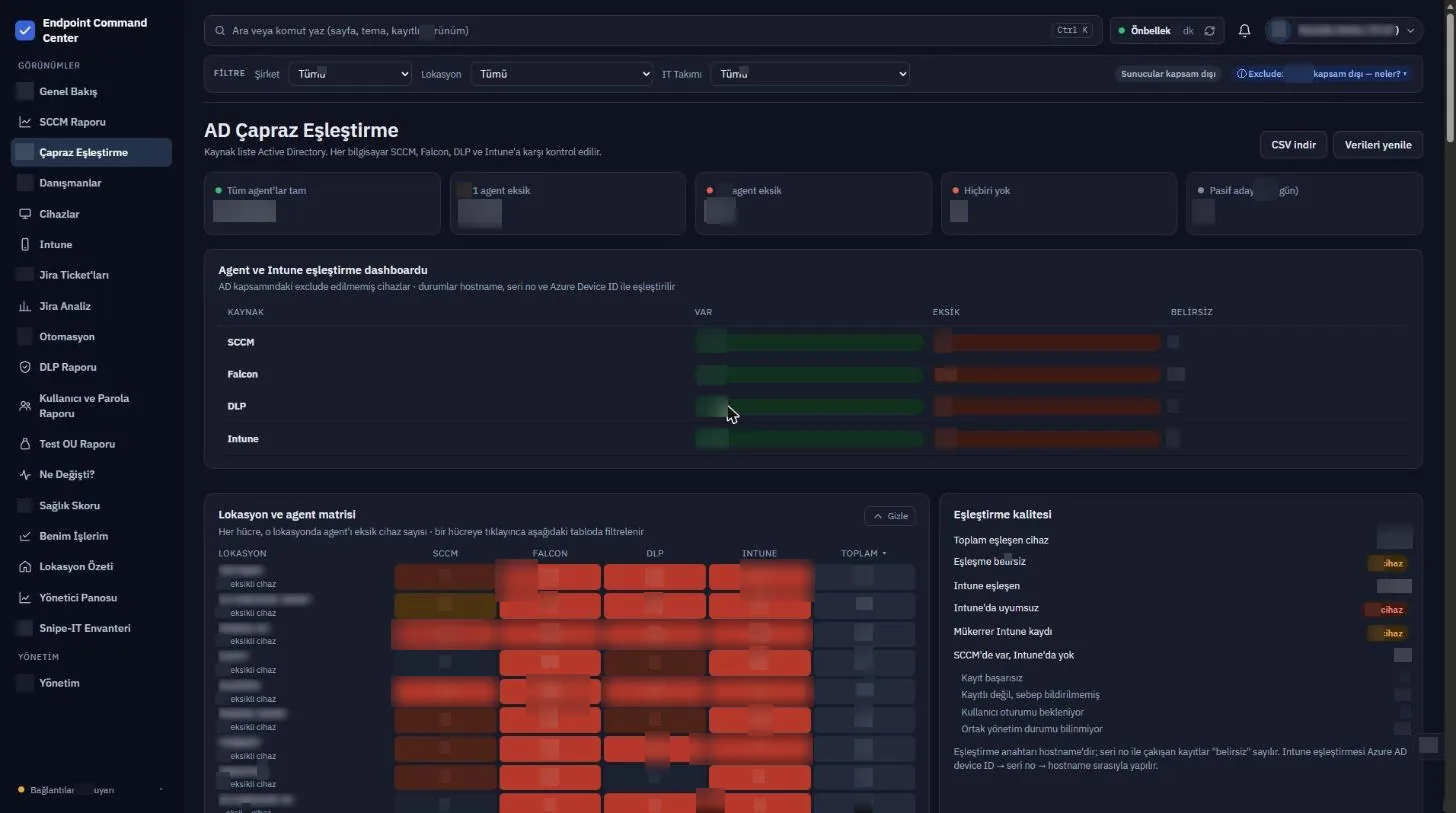
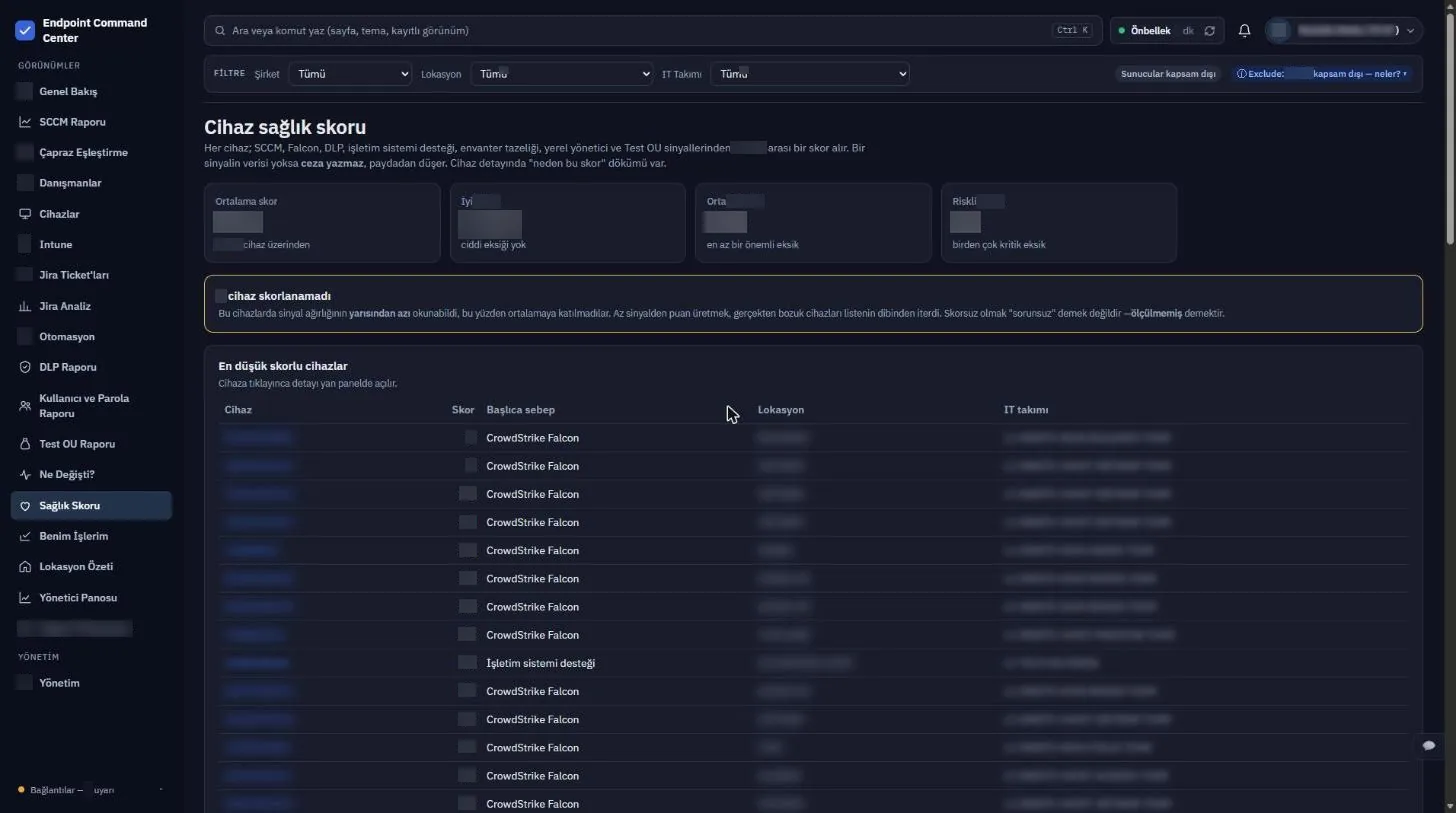
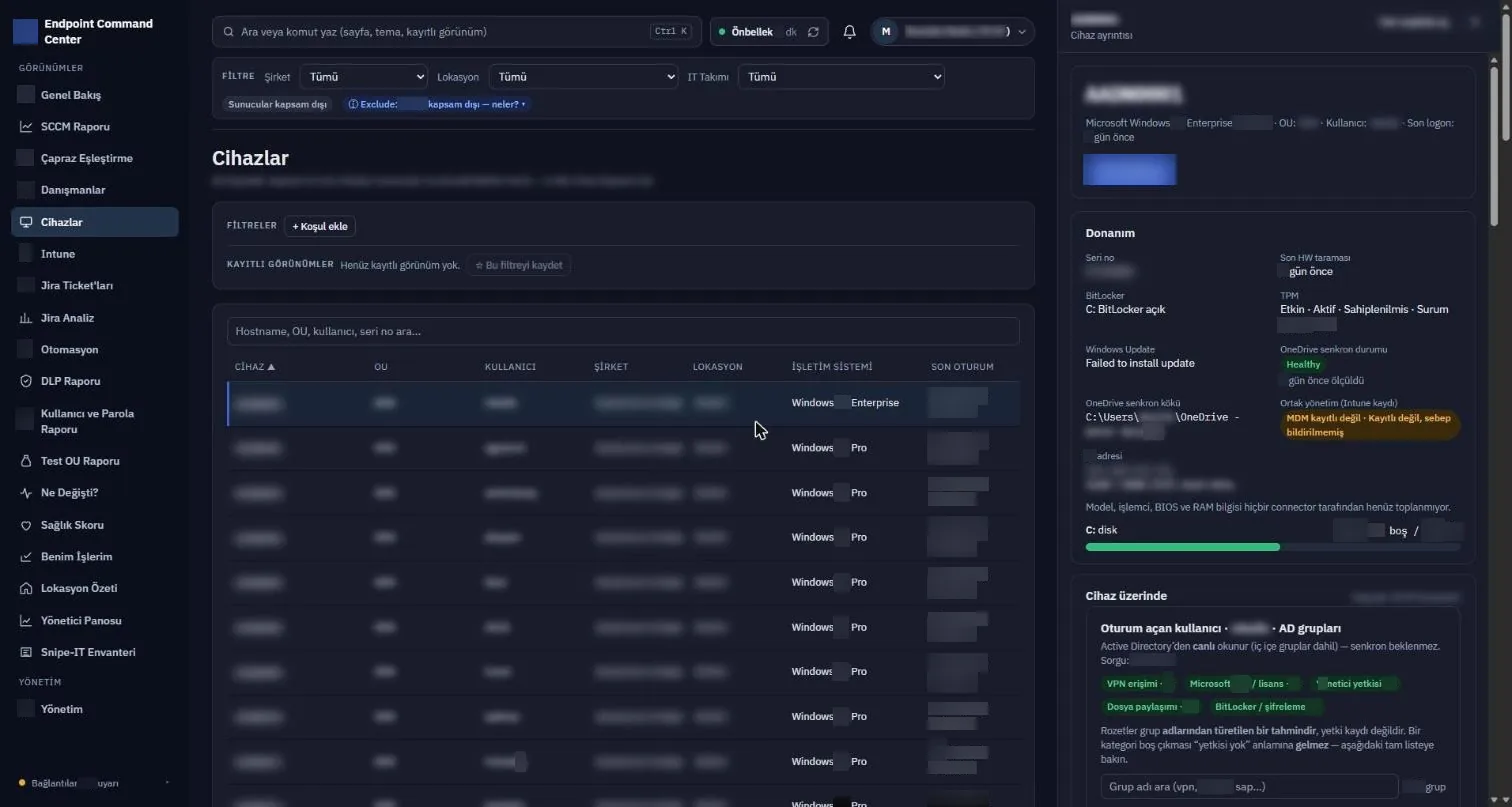
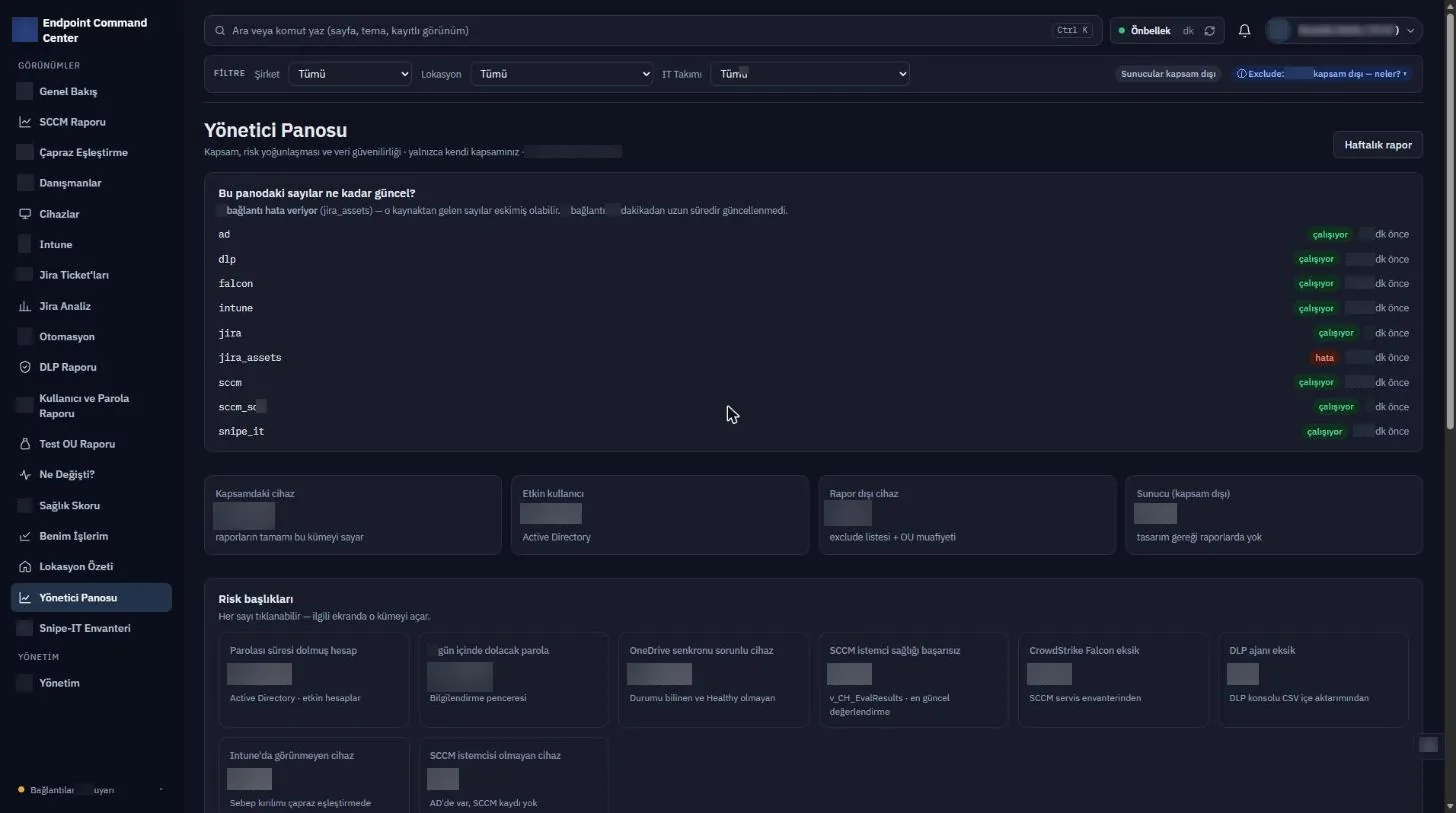
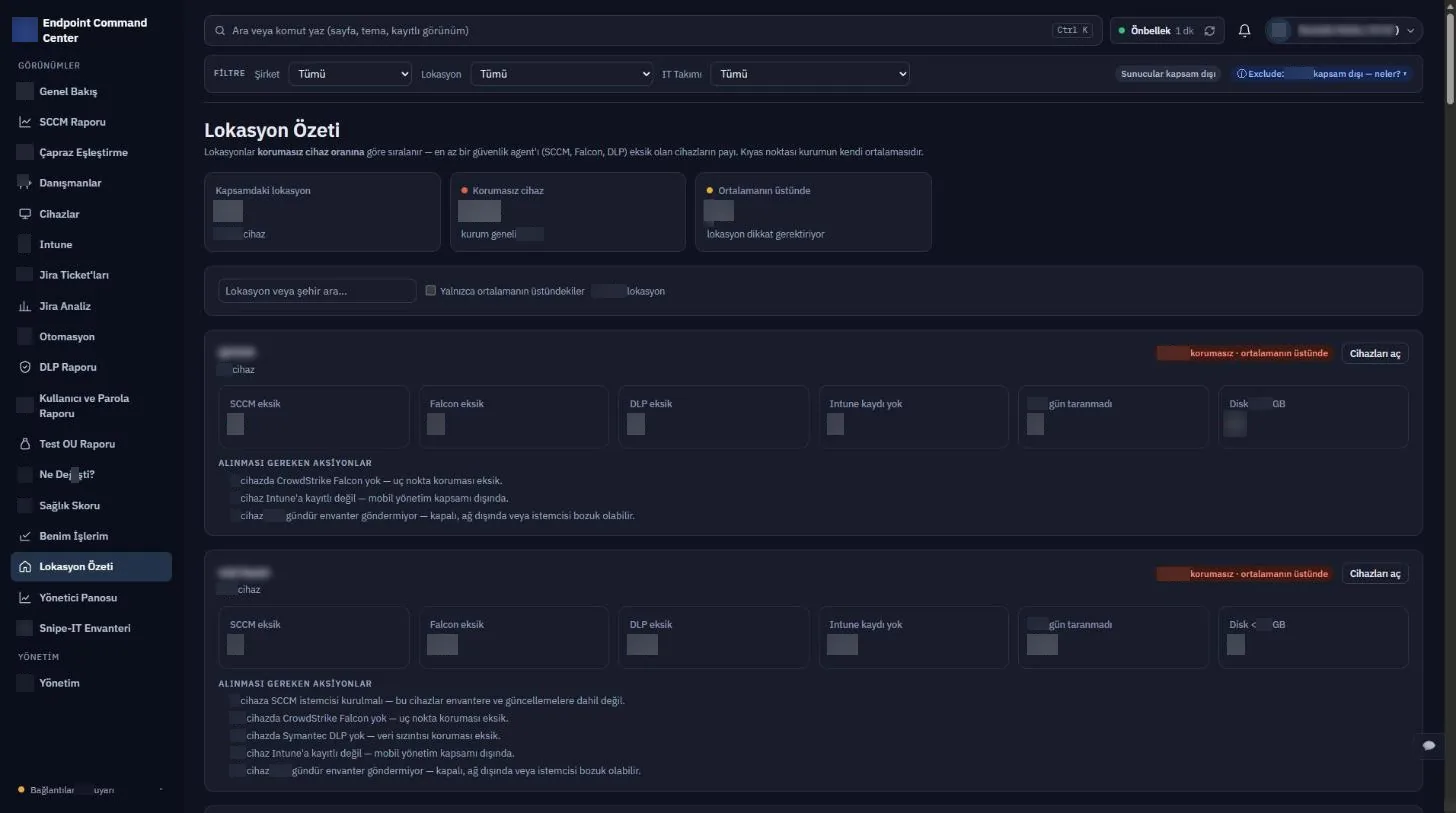
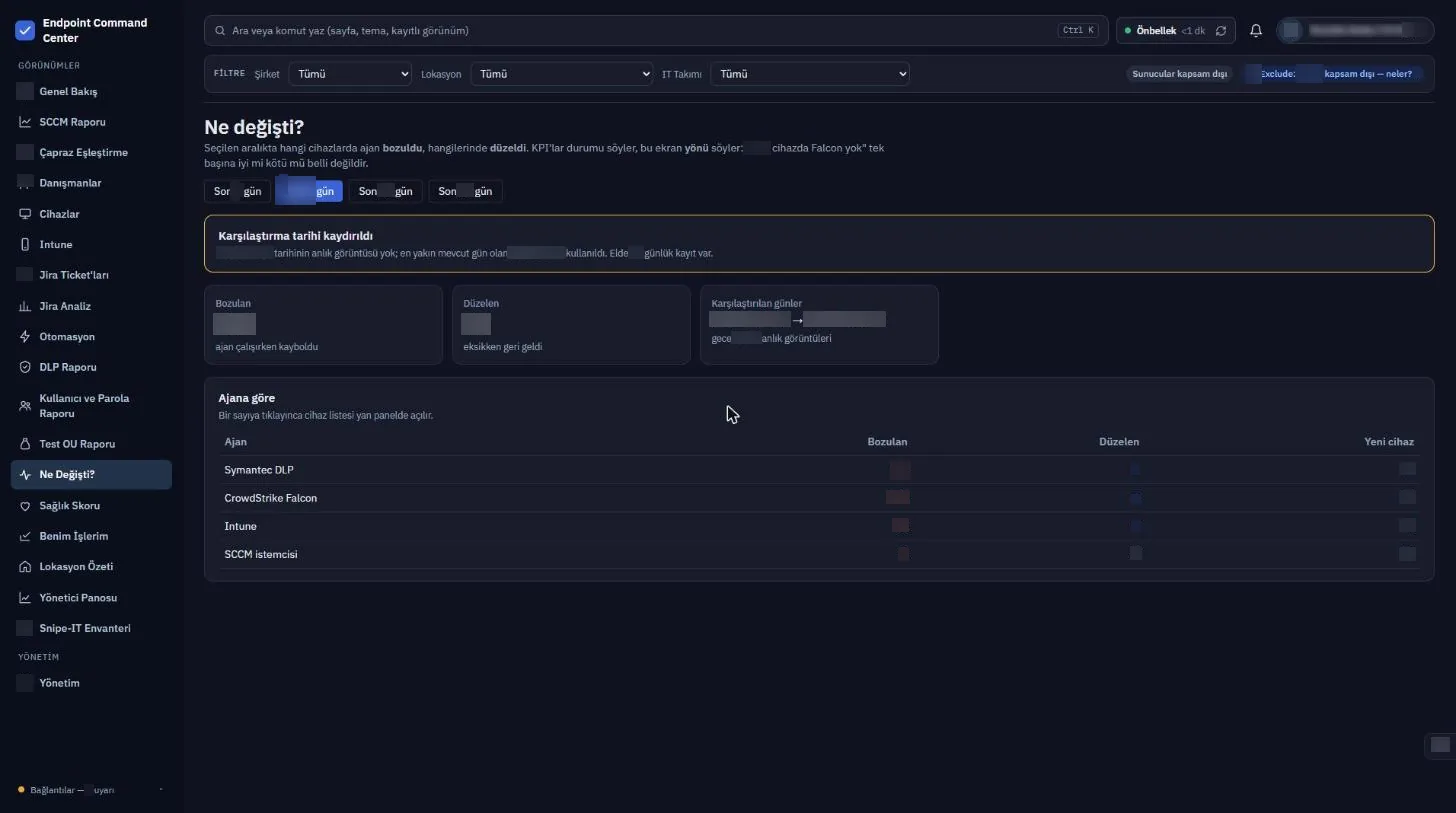
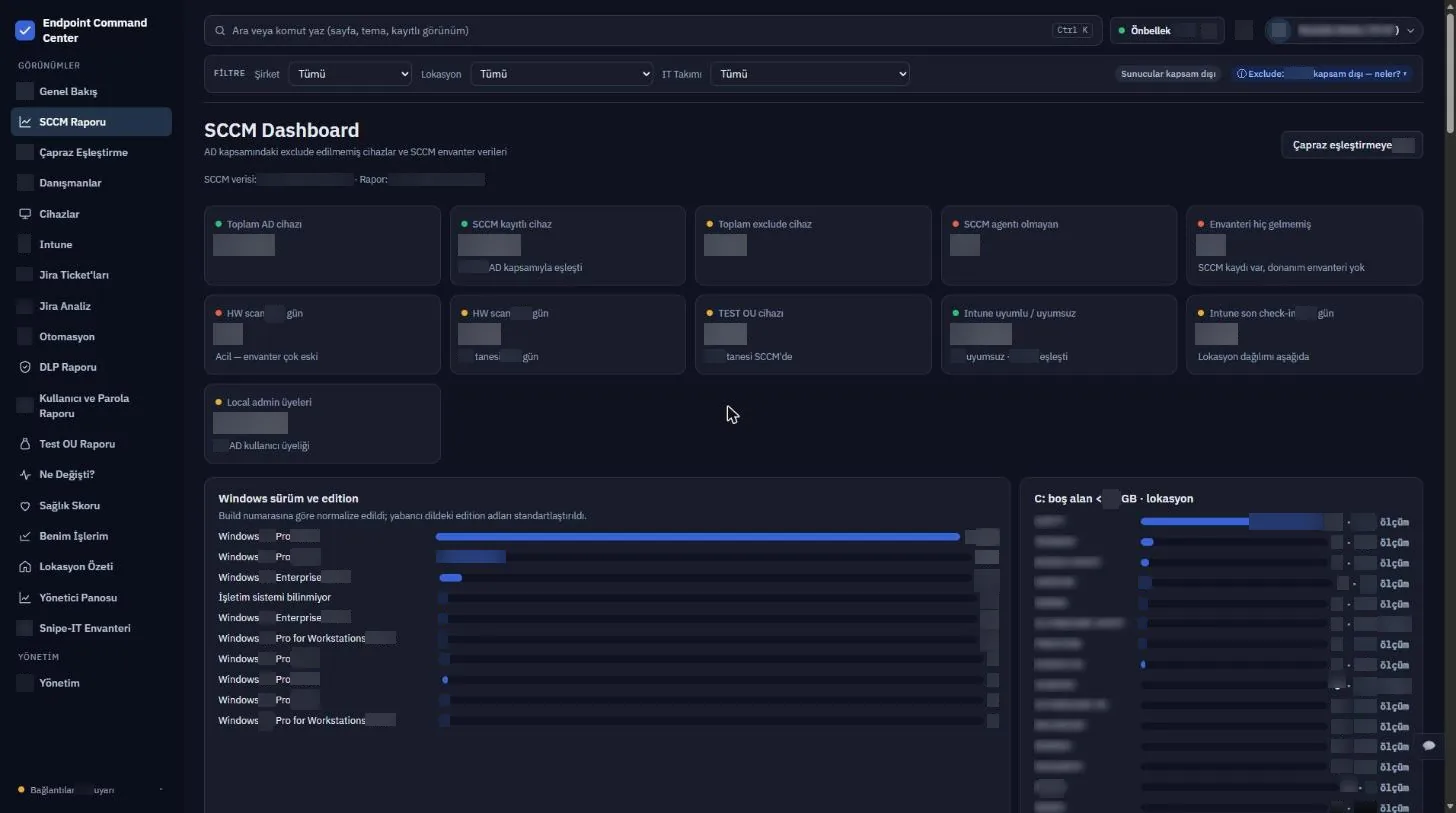
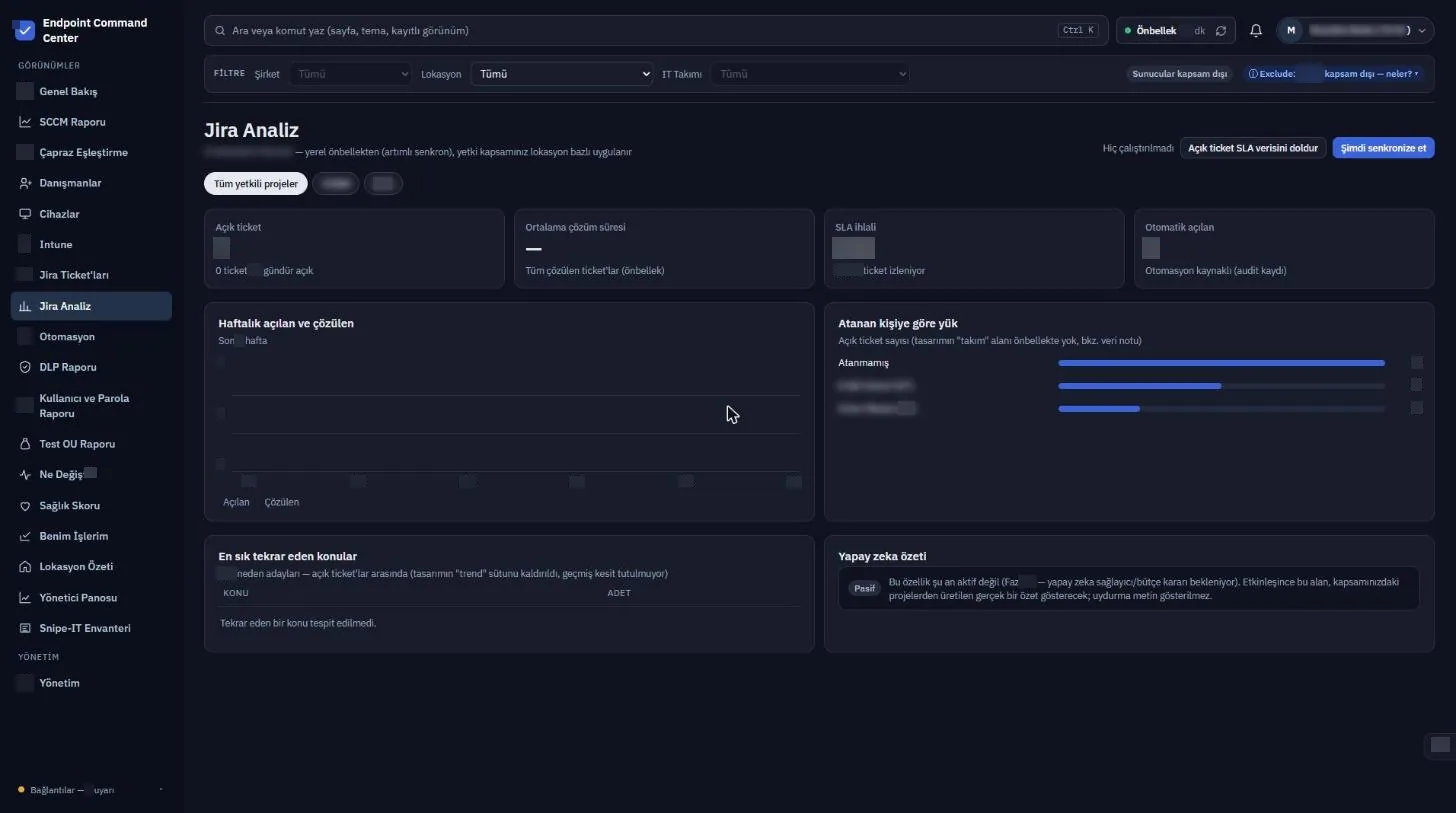
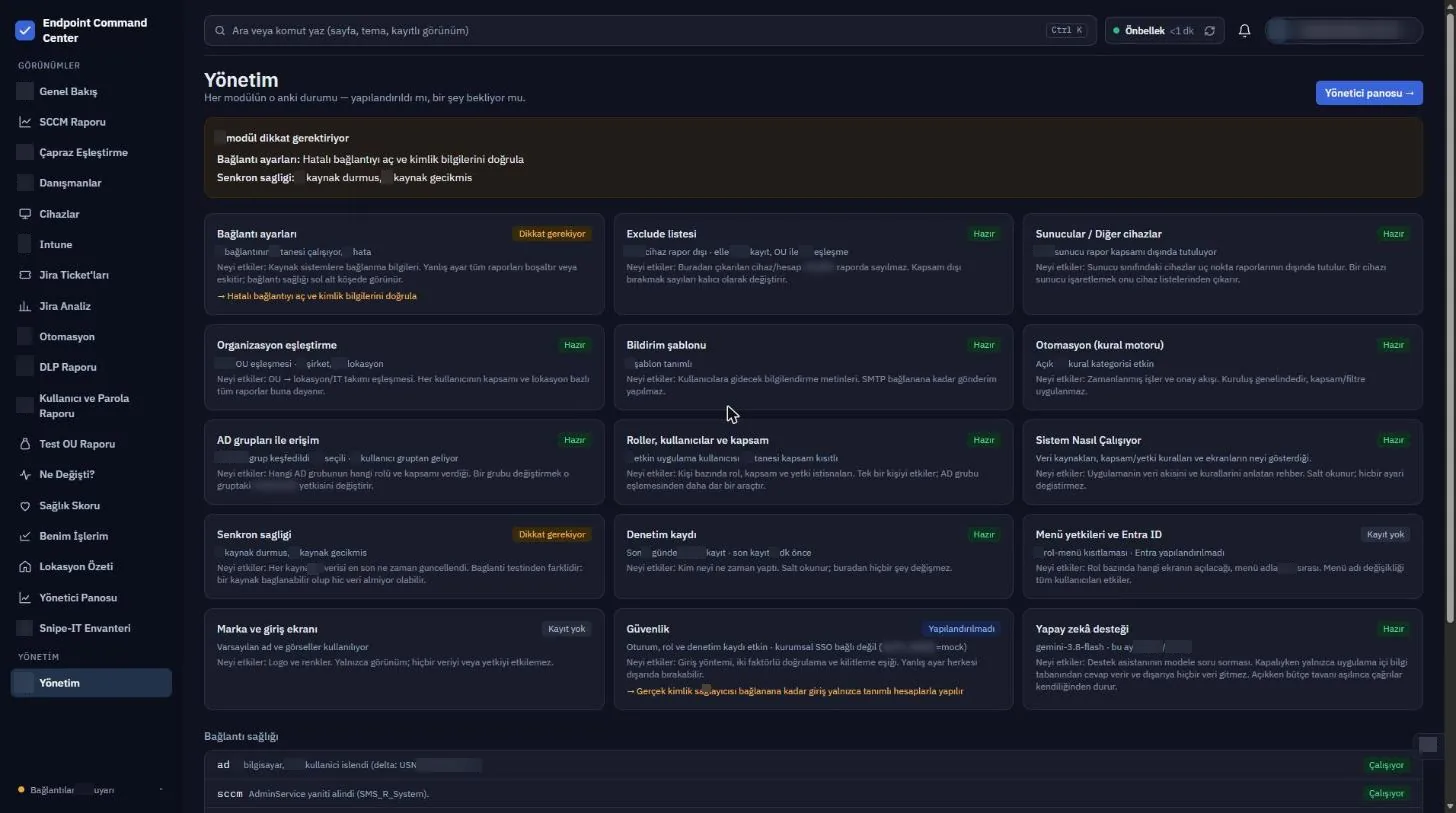
Active Directory is the source list. Servers, test OUs and exempted devices are excluded by rules, so every report counts the same set.
If a connection fails or data is stale, the screen says so. Stale data never quietly turns into ‘no issues’.
Field teams see only their own locations; management sees the whole organisation. Permissions come from AD groups or are granted per person.
Expired and soon-to-expire passwords, locked accounts and accounts that haven't signed in for a long time.
Start remote control or remote assistance from the device page in one click; every session is written to the audit log.
Press Ctrl K to find devices, users, pages and saved views from the same box.
No. ECC reads from the consoles and interfaces of the tools you already use. Installation happens only on a server in your organisation.
The connector architecture was built for adding new sources. Any tool with an interface (API, database view or export file) can be added per project; matching and scoring automatically take the new source into account.
It runs on real data at organisations with thousands of endpoints. The device list uses virtual scrolling, so it stays smooth with large inventories.
We quote based on device count and the sources to connect. First you see the results on your own data with a limited-scope pilot installation.
Personal data such as user names and sign-in information is processed, but it never leaves your organisation's server. Our KVKK consulting helps with privacy notices and the processing inventory.
Born in the field
ECC wasn't an idea dreamed up at a desk. It was built side by side with the DT team of an organisation with thousands of endpoints, looking at real data every day. If your organisation also has hand-collected lists, consoles that disagree or a report nobody reads, we can build your product together the same way.
01
Together we map the lists your team collects by hand every day, the spreadsheets it merges and the alerts it misses.
02
Not sample data: a first version running on real data from your own systems is in your hands quickly.
03
We set every threshold, every score and every definition of ‘missing’ by talking it through with your team. No unverified number reaches the screen.
04
When a new tool or a new question comes up, connectors and screens are added; the product evolves with your organisation.
Tell us the tools you use and roughly how many devices you have. We'll share the pilot scope and a quote within one business day. If you have an idea for a product tailored to your organisation, choose ‘Custom product development for our organisation’ as the topic.